“One of the biggest fears I had when I was leaving prison was that I would lose my faith,” says David*, who spent more than a decade incarcerated in a West Australian prison.
“I would rather stay in prison and have my faith than get out and lose it.”
David’s* steadfast declaration bears witness to Jesus’ parable in Matthew 13:44: “The kingdom of heaven is like treasure hidden in a field. When a man found it, he hid it again, and then in his joy went and sold all he had and bought that field.” Saved and set free two years into a 13-year prison sentence, David* had landed on a truth he would cling to for the remainder of his sentence and beyond: the reality that the world pales into insignificance when held up against the hope, joy and love found in Jesus.
David* was just 18 when he went to prison. “For the first two years of my sentence, I wasn’t a Christian. Still using drugs, still angry, not a good person. But two years in, I had an encounter with God. My mother was always praying for me, and she would send Christians in to visit me. I wasn’t interested in anything to do with God, so I wouldn’t even go down to the visit room. Looking back, I think, how rude is that, you know?! I just wasn’t interested. But one day, after many months of her persistence, I thought, ‘I’ll go down and see what they have to say’. So I did, and a guy from mum’s church was there. I don’t remember anything about the meeting – he didn’t say anything profound, no light bulbs went off. But something definitely happened, because from that time onwards, I had this insatiable hunger for the Bible, for the things of God. And my life started to change.”
“Now, it was a very slow change. The thing I found challenging was allowing God to change me while still in that environment. Prison is a very negative place. There’s a lot of blame shifting. So it’s not the ideal environment to try and change. But I’ve found that when the spirit of God moves, things do change.”
“When you commit your life to Christ, it’s like you’re a baby. You don’t know anything. You’re all happy, bubbly – something’s happened inside you. But you don’t know how to live this new life. That’s where the chaplains and Prison Fellowship volunteers that I met were really instrumental. Teaching and training, explaining the Bible to me – discipling, really. It was invaluable. I can remember many times walking back from chapel, thinking, ‘Now, this is real life!’”

“There’s a misalignment of values in prison, and one of the reasons so many people can’t break out of the cycle is because their mentality is reinforced by the environment. So to have people come in and help you see another way to live, that’s a powerful thing, you know?”
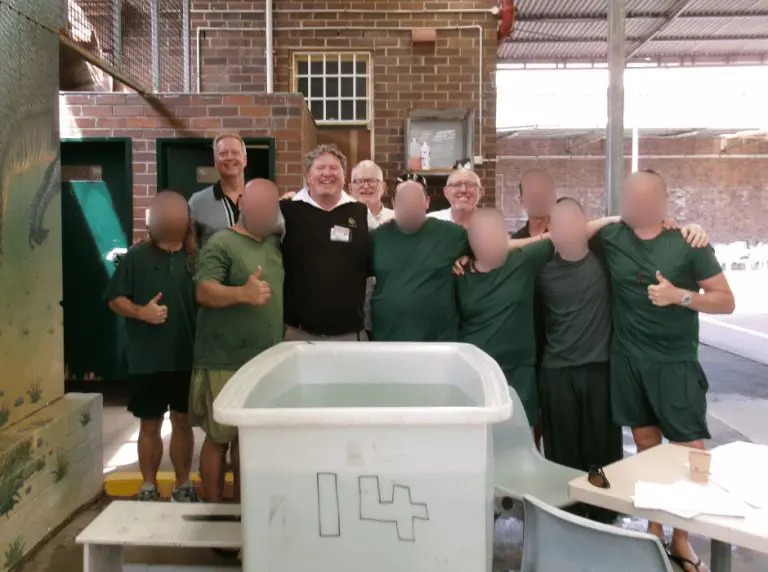
“I remember sitting there with people from Prison Fellowship and thinking, ‘These people are giving up their day to be here. They could be at the beach, or watching TV. But they chose to come here to visit us.’ That told me a lot about the type of human beings they were.”
“Even as hard as guys are in prison, they can see that.”
Having completed his sentence, the time came for David* to be released – a date he anticipated with mixed feelings. He had now lived more than a decade as a Christian inside – but was unfamiliar with a life of faith on the outside. “I was so afraid I was going to fall back,” he says. “That mentality I mentioned – there’s the thinking that you have to have money. Guys look at themselves when they get out and see a 30- or 40-year-old guy, just out of prison, not a cent to his name. They feel so far behind.” It’s the urgency to play catch-up that leads so many to fall back into old ways, David* explains. To counteract the temptation, David* came up with a plan. “It was a very simplistic plan. I told myself: ‘If you’re in church, you can’t be doing bad things. So get yourself to church as much as you can.’”
The first church David* attended was one he was invited to by a Prison Fellowship volunteer he had met inside, Lucy*. Lucy* was also mindful to anticipate David’s* practical needs post-release. “Just before I got out, she said to me, ‘My husband builds kitchens. How about this – if you need a job when you get out, you come and work for him.’ That offer was extremely helpful. The fact that they believed in me and were willing to take a chance on me was amazing. Your first job out of prison is such a crucial part of reintegration, not just because it provides you with an income, but because it gives you purpose – a reason to get out of bed. I worked with them for about six months, and during that time they would take me to church. I ended up going there for years.”
“Now, it wasn’t all smooth sailing. At first you’re like a fish out of water. It doesn’t matter how comfortable people try to make you; you’re uncomfortable because you’ve never been in that environment before. So it takes a bit of effort for you to fit in, and it takes effort from them, too. But that love, that genuine desire to connect with you, means so much. When I look back, I think if we can replicate what happened to me, a lot of other guys would have a really good chance at reintegrating, too.”
“The first Christmas I was out, Lucy* invited me to the beach with her family. I was shocked. Thinking back, I don’t even know what you would call that kind of care, you know? Funnily enough, life went on, and I ended up marrying her sister. You never know what God has in store.”
For the past three years, David* has been helping share the same love he was shown by walking alongside former inmates at ‘Church in a Circle’, a church community birthed out of Prison Fellowship’s t24 post-release program.
“There are a lot of things guys need when they leave prison, and a main one is companionship.“
“When you come out, oftentimes you end up without many friendships. Everybody has moved on, and pretty much the only people you know are the people you went to prison with. So if you don’t want to be going back to that life, it’s going to be a lonely time for you. One guy we walked with last year, Jason*, left his whole life behind, and he was terribly lonely. He said to me, ‘I don’t have anybody.’” Finding acceptance and community after prison, David* says, can actually make the difference between staying out or going back inside. “I don’t think I’m overstating it. I think it’s really undervalued. People need to connect with others. You can survive toughing it out on your own for a while, but human beings are not good at being alone.”
“Often when we’re in a community, we take for granted what it is to be without one. A big danger of the Christian faith is that we live in these ‘bubbles’ and forget that some people don’t have one. We forget that people can’t survive without what we have.”
Many of the guys David* walks alongside today have experiences that bring back memories of his own journey. “I had served a long time, so when I got out, I felt a huge sense of euphoria, relief. But because I had been in such a closed environment where everything was very predictable all the time and nothing new happened, I found my senses went into overdrive almost immediately. Smell, sight, sound – it’s a very surreal experience. You feel disorientated over basic things like ‘Where is the shopping centre?’ or ‘What do I do now?’ I remember just standing and staring at all the cars and people. My mum had bought me an old car because I had kept my licence up to date in prison. And she thought I was just going to hop in. But I said, ‘No, I can’t drive.’ I just felt too overwhelmed by everything. She was quite taken aback because I was young and capable. But I see the same thing in guys going through t24 now. One guy, he’s just come out after 15 years and has total shell shock. He doesn’t know what to do; he’s just lost.”
“Leaving prison after a long sentence, you find that the world has moved on. People have moved on, technology has moved on. You need someone beside you to point you in the right direction. I remember standing at an ATM and just having it beeping at me because I was asking it to give me $10 notes. I didn’t know it didn’t dispense $10 notes anymore.”
“You feel like a fool. There are so many things you don’t know that the average person wouldn’t even think about.”
There’s a total disconnection from society. So sending people out the prison door without anyone to help them on the other side makes it really very difficult.”
It is this reality that has led David* to start his own cabinet-making business that will employ former inmates post-release. “At the heart of it is a desire to help people reconcile with God, with their family and with society. There are so many challenges that come your way, and one practical need I want to meet is employment. I was blessed with relationships that helped me get work when I was released, and that made such a difference. Because when you go for a job, people want to know, ‘What are your skills?’, ‘What can you do?’ and ‘Have you got a record?’ Just based on those three questions alone, a lot of guys won’t make it through an interview.”

“It’s my belief that if you want to help a drug addict, an alcoholic, or someone who has been steeped in violence or crime, the best time to do that is when they have just been to prison. The drugs or alcohol are out of their system, and they’ve had time to think. They’ve often made a determination that they want to change. And you know, maybe one out of 10 guys who you try to help will actually make it; that’s just the reality. Nine out of 10 probably won’t. But should you still try? I think you should. I think we have to give people the chance.
“Prison ministry is one of the few ministries that Jesus mentioned: ‘When I was in prison, you came and visited me’ (Matthew 25:36). When you look at the people He ministered to, it was the people that no one wanted to help. When everybody else in society said, ‘They’ve done the wrong thing, they’re probably just getting what they deserve,’ – that is the space He loved going into. I think we need to give people the chance and leave the results to God.”
“There’s a song I love, and in it it says, ‘We’re not waiting on a move of God. We are the move of God. Sometimes we think ‘Oh, if only God would do something great…’ Well, God has done something great. And He established the church to continue it on.”
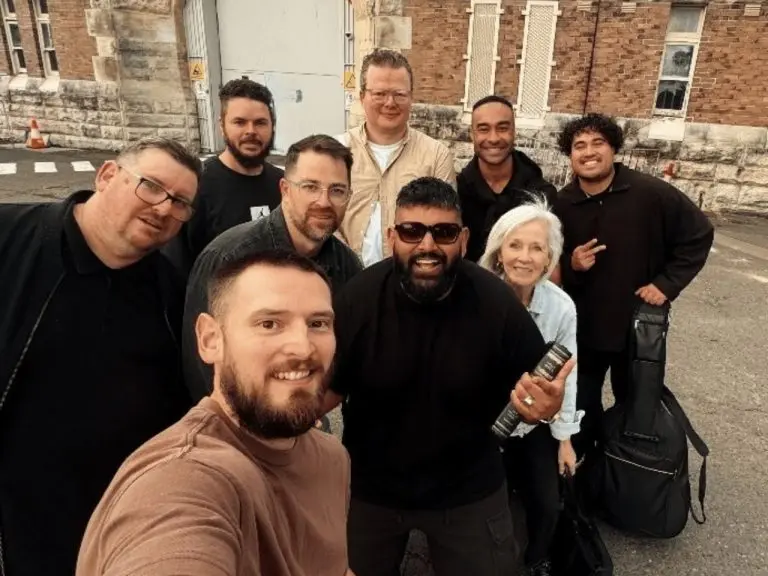
*Names have been changed and representational images have been used for privacy.

FOR FORMER INMATES LIKE DAVID*, having people walk alongside them as they rejoin the community after prison can make the difference between staying out or going back inside. Your gift can help t24 volunteers provide practical support, guidance and friendship to God’s children after prison.